Cleaning - The Rubber Blade removes any excess toner that drops into the debris cavity. The eraser lamp removes any excess charge off the photosensitive drum. This leaves the drum with a charge of 0 Volts.
Conditioning - The primary cornea (High Voltage Wire) adds a negative charge of around -600 volts to - 1000 volts.
Writing - The laser light hits the photosensitive drum, and dissipates the negative charge to the centre of the drum which is grounded. This leaves sections of the drum with a voltage of -100 volts.
Developing - The drum rolls through a supply of negativly charged toner particles (Particles are -200 Volts to -500 Volts).
Where the drum hasn’t been touched by the laser light, a lower negative charge is still there, so the particles are not attracted to this section of the photosensitive drum.
Transfer - A strong positive charge is applied the the paper, the particles of toner are attracted to the paper.
Fusing - The toner that is on the paper is heated and pressurixed, the toner becomes bonded to the paper.
The Toner Cartridge (or EP-Electro-Photographic) contains the photosensitive drum, Cleaning blade, and primary corona wire. The transfer corona wire is located on the printer itself.
Select Command Prompt
Type Notepad
Click File
Click Open
Double click My Computer
Double click C: drive
Click Users folder
Click appropriate user profile folder
Save files to be backed up to external USB drive
System File Checker (SFC) scans and checks all Windows Resource Protected (WRP) resources. Windows Vista added the following functionality to the SFC tool:
The following link contains the full instructions for a Windows Vista installation, rather it be a clean install or a reinstallation. If you are doing a reinstallation, your files are automatically saved in a windows.old folder that you can migrate to your new os after the install. Instructions are included in the link.
A SODIMM is a 144-pin memory module designed for use in primarily laptops. These transfer data in 64-bit chunks. There is also a 72-pin SODIMM. This module transfers data in 32-bit chunks.
A SIMM (Single-Inline-Memory-Module) is a 72-pin memory module designed for use in desktop computers. These transfer data in 32-bit chunks.
A DIMM (Dual-Inline-Memory-Module) is a 168-pin memory module, also designed for use in desktop computers. These transfer data in 64-bit chunks.
Answer: Four, seven, or nine pins in an S-video connector. S-video connectors are analog video connectors that can transfer video signals to other devices.
 Image via Wikipedia

 Related Posts:
Printer
Related Posts:
Printer
 Image via Wikipedia
 Image via Wikipedia
 Image via Wikipedia
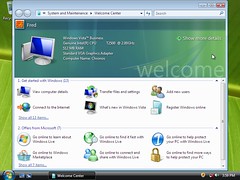 Image by Fred via Flickr
 Image via Wikipedia
 Image via Wikipedia